



















Storage Tanks, Terminals and Loading Safety

Instructor
What Will You Learn?
About This Course
Requirements

FAQ
Check the frequently asked questions about this course.
Spark Training Institute

Curriculum Overview
This course includes 4 modules, 8 lessons, and 3:45 hours of materials.
The kind of tank depends on the product. Fixed-roof tanks suit products with low vapour pressure. Floating-roof tanks hold crude and gasoline and cut vapour losses because the roof rests on the liquid. Spheres and bullets store gases such as LPG as liquids under pressure.
Tanks rely on a set of fittings to stay safe. Vents and pressure-vacuum valves let the tank breathe as the level changes. Level gauges tell the operator how much is inside, and a separate high-level alarm warns before an overfill. Foam pourers and fixed fire systems are the last line of defence.
Moving product in a terminal means setting a route: opening and closing the right valves from source to destination. A wrong line-up can send product into the wrong tank or contaminate it. Operators confirm the route, check the receiving tank has room, and watch the transfer from start to finish.
Liquids expand when warm, so volume must be corrected to a standard temperature before quantities are compared. Operators gauge tanks by level, read temperature, and use tables or software to calculate the corrected volume. Differences between books and tanks are investigated, never ignored.
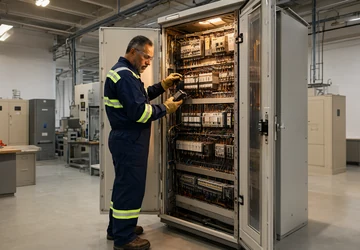
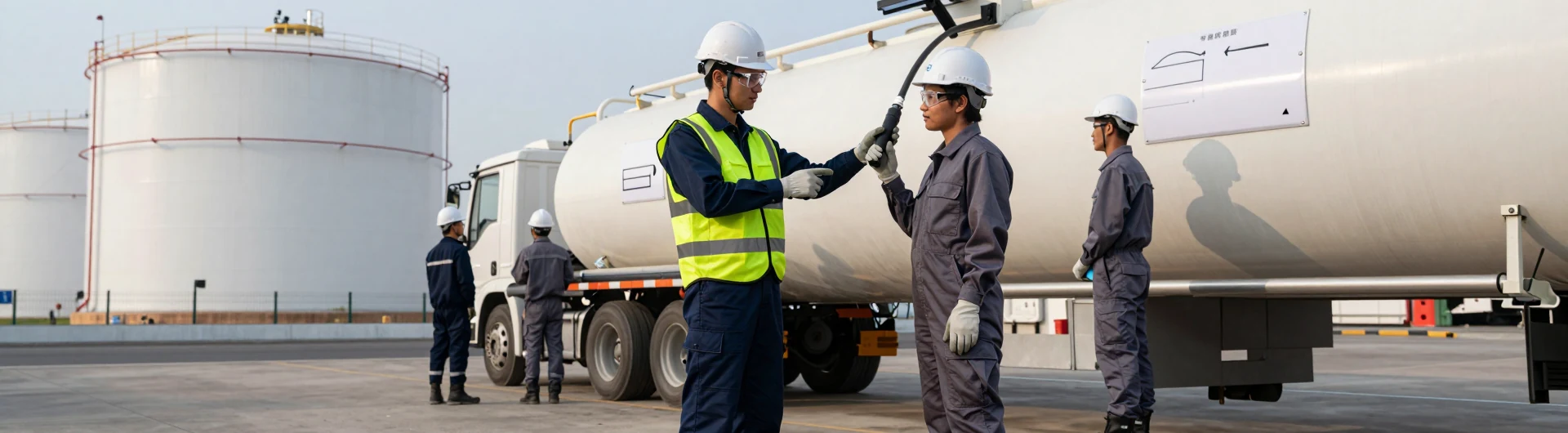
A loading gantry is where product, vehicle and people meet. Before loading, the driver is identified, the vehicle checked and the earth bonding connected so static cannot build up. Overfill protection stops the pump, and vapours are sent to a recovery system where one is fitted.
Loading a ship is a joint job between vessel and terminal. They agree the plan, check each other's equipment on a shared safety checklist, and keep clear communication throughout. Moorings, hose connections and weather are watched constantly, and either side can stop the operation.
Fire needs fuel, air and an ignition source. In a terminal the fuel is always present, so control focuses on the ignition source and on keeping vapour from collecting. Static electricity, hot work, vehicles and electrical equipment are the usual sources, and bunds and foam systems limit the size of any fire.
Most spills come from overfills, wrong valve positions and equipment left open. Prevention is simpler than clean-up: alarms that work, checks that are done and drains that are closed. A response plan with trained people and ready equipment keeps a small spill from becoming a big one.
Course Certificate
Course Specifications




Subscribe to Our Newsletter


Additional Links
Login Register Contact Certificate Validation Become Instructor About Terms and PoliciesPopular Categories
Health, Safety and Environment (HSE) Management and Leadership Business Administration Banking and Finance Drilling and Well Services Mechanical EngineeringContact US




Reply to Comment