


























+964 770 018 5648
spark@infinity-en.com
English flag
English
Select a Language
English flag
English
Arabic flag
Arabic
0
Categories
Gas Treatment and Dehydration Essentials

Gas Treatment and Dehydration Essentials

A practical course in plain language: describe what is in raw gas and why it must be treated.
0 Students
8 Lectures

What Will You Learn?

Explain the core principles and vocabulary of Gas Treatment and Dehydration Essentials
Describe what is in raw gas and why it must be treated
Explain how glycol units remove water from gas
Explain how amine units remove H2S and CO2
Spot and correct common treating problems early
Use worked examples and case studies to solve common workplace tasks

About This Course

Across four short modules (Gas Properties and Specifications, Removing Water, Removing Acid Gases, Operations and Troubleshooting) this course builds a practical, plain-language understanding of gas treatment and dehydration essentials. Every lesson ends with key points you can apply on site. The course suits operators, technicians, engineers and graduates entering the sector.

Requirements

No advanced prior knowledge is needed: an interest in the subject is enough
A computer, tablet or phone with an internet connection
Willingness to apply the lessons to your own workplace situations
Requirements

FAQ

Check the frequently asked questions about this course.

Who is this course for?
Gas Treatment and Dehydration Essentials is designed for professionals, graduates and organisations who want structured, job-ready skills. No advanced background is needed beyond the requirements listed on this page.
Will I receive a certificate?
Yes. Participants who complete the course receive a SPARK Training Institute certificate of completion.
How is the course delivered?
The course is organised into four modules of short lessons that you can study at your own pace, with support from the SPARK team when you need it.
Can my organisation enrol a group?
Yes. Contact SPARK Training Institute through the Contact page to arrange group enrolment or an in-house programme for your team.
Spark Training Institute
214 Courses
0 Students
Spark Training Institute
Curriculum Overview

This course includes 4 modules, 8 lessons, and 3:45 hours of materials.

Gas Properties and Specifications
2 Parts | 0:50 Hours
What is in produced gas
Free

Produced gas is mostly methane, but it also carries heavier hydrocarbons, water vapour and often CO2 or hydrogen sulphide. Each component affects value, safety or equipment, so the plant's job is to separate what the customer wants from what they do not.

Study Duration 25 Minutes
Attachments 0
Sales gas specifications

Gas can only enter a pipeline if it meets the buyer's specification. The main limits cover water content, hydrocarbon dew point, heating value and the level of sulphur and CO2. These limits protect pipelines from liquids and corrosion and keep customers' burners working properly.

Study Duration 25 Minutes
Attachments 0
Removing Water
2 Parts | 1:00 Hours
Why water must be removed

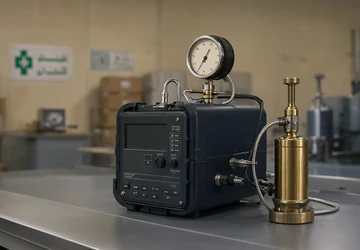
Water in a gas line is trouble. Combined with CO2 or H2S it makes acid that corrodes steel. Under pressure and at low temperature it can also form hydrates, which are ice-like solids that can block a line completely. Removing the water prevents both problems.

Study Duration 25 Minutes
Attachments 0
Glycol dehydration

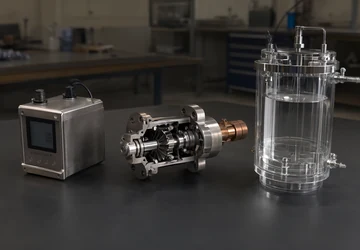
In a glycol unit, wet gas rises through a contactor where triethylene glycol flows down and absorbs the water. The wet glycol is then heated in a regenerator to boil the water off, and the dry glycol returns to the top of the contactor to work again. Molecular sieves are used when very dry gas is needed.

Study Duration 35 Minutes
Attachments 0
Removing Acid Gases
2 Parts | 1:00 Hours
H2S and CO2: the hazards

Hydrogen sulphide is toxic at very low concentrations and it dulls the sense of smell, so you cannot rely on your nose to warn you. CO2 is not toxic in the same way but it is corrosive when wet and displaces oxygen in enclosed spaces. Both are called acid gases.

Study Duration 25 Minutes
Attachments 0
Amine sweetening

In an amine unit, sour gas meets a solvent in an absorber and the acid gases dissolve into it. The rich solvent is sent to a stripper where heat releases the acid gases, and the lean solvent is cooled and returned. The cycle runs continuously, and the quality of the solvent decides how well it works.

Study Duration 35 Minutes
Attachments 0
Operations and Troubleshooting
2 Parts | 0:55 Hours
Monitoring unit performance

Good operators watch trends rather than single readings. A slow rise in differential pressure, a creeping water dew point or a growing solvent make-up rate are all early signs. Catching them early costs a small adjustment; catching them late costs a shutdown.

Study Duration 25 Minutes
Attachments 0
Typical problems and how to respond

Most treating problems have a handful of familiar causes. Foaming comes from contaminants, carry-over from high rates, hydrates from cold and wet gas, and corrosion from poor control of acid gas and oxygen. A calm, step-by-step approach finds the cause faster than guessing.

Study Duration 30 Minutes
Attachments 0
Certificates
1 Parts
Course Certificate
Course Certificate
If you pass all the lessons in this course, you will receive this certificate.
Type Course Certificate
Reply to Comment
Comments Approval

Your comment will be visible after admin approval.

0
0 Reviews
Content Quality (0)
Instructor Skills (0)
Value for Money (0)
Support Quality (0)
Reply to Review
Submit Reply

Your reply to this review will be visible to all users.

Gas Treatment and Dehydration Essentials
$412,500

This Course Includes

Official Certificate
Instructor Support

Course Specifications

Sections
4
Lessons
8
Capacity
Unlimited
Duration
3:45 Hours
Students
0
Created Date
4 Nov 2026
Updated Date
4 Nov 2026
Gas Treatment and Dehydration Essentials
You are viewing
Gas Treatment and Dehydration Essentials